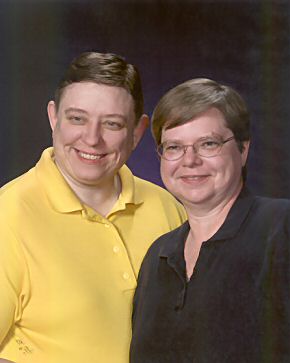
I've been reading a lot lately and I want to put out some of my thoughts, and then a final essay on all I wrote about.
The United States needs to drastically cut back its forces. Pull all our troops out of South Korea, for instance. South Korea is a wealthy, highly advanced technological country. They have better broadband access, they have cell phones that make ours look like toys and they have money. We would be willing to sell them arms if they want, and if they can pay. They can certainly afford to defend themselves, even if they can't spend all their time surfing the Web and playing Go anymore.
Troops we have in Europe should be pulled out. I can see the point of keeping the military hospital in Germany open and certain airfields, but that's all. We don't need to have ground troops in those countries. The risk of war there is pretty much nil, and again, they can afford to guard their own countries. There is no longer a need for us to do so.
The war in Afghanistan.. use various forms of intel and focused use of Special Forces units to keep track of Al Qaeda and leave. It's not up to us to make them a democracy, if that is even possible, which I personally don't believe it is.
We are pulling out of Iraq and within a few years, we should be gone completely. Once that is done, cut back on the military, reduce spending, focus on R&D, having a smaller, more effective force. The military should only be used for direct threats to our soil, as it was envisioned to be. We cannot afford to police the world, nor is it our job or our destiny to do so.
Let the National Guard be again, a 2 weeks a year, one weekend a month force, which helps out it's state in times of disaster. That is what it should be used for.
This is the first step. This will help stop the outrageous spending on defense, cut back on big systems we don't need and focus on making our soldiers even more effective and deadly, but with the fervent hope that they will never be needed.
Barbara
Tuesday, May 25, 2010

Tuesday, March 30, 2010
The New Mises Academy
This blog is about learning and right now, in particular, learning Austrian Economics. The wonderful mises.org has just announced a Mises Academy. There is an article about the context of this announcement. They are already offering a class that sounds very interesting. It is about understanding the business cycle. This Academy is definitely something to keep your eye on!
Monday, March 1, 2010
Mental exercise is important too
Everyone knows that they should eat right and exercise. Whether we do it or not, we know that we should. Something people don't think about as much is mental exercise. Especially as you get older, you need to 'use it or lose it'. If you do the same things every day, your brain, like your muscles, can get lazy. I use a website called lumosity.com to do brain exercises and I have noticed a definite difference. The need for mental exercise is also why I continue to try to learn new things. I've studied Latin, and learned to knit. Now I am studying Austrian economics and keeping my brain agile while learning. What are you doing to keep your brain fit?
Wednesday, February 24, 2010
Third lecture home study course
The third lecture in the Mises University home study course is called 'Mises in one Lesson - history of Economic Thought' given by Murray Rothbard. Total time is 56:38.
He starts out with a very brief history of the Austrian school, mainly that while the founders of the Austrian school of economics were, very naturally, Austrian, there are not so many now. Most 'Austrian' economists are now of course, from many other countries.
He then talks about Human action. Austrian school is based on individuals doing things, most other schools of thought focus on groups or aggregates.
When Carl Menger was working, the predominant school then was the classical school, Smith, Ricardo, etc. He gives examples of their thinking.
Rothbard then gives an analysis of the main points of Austrian economic thought. (This is not complete, just the points I wanted to remember.)
This was another excellent lecture, with a lot of information.
He starts out with a very brief history of the Austrian school, mainly that while the founders of the Austrian school of economics were, very naturally, Austrian, there are not so many now. Most 'Austrian' economists are now of course, from many other countries.
He then talks about Human action. Austrian school is based on individuals doing things, most other schools of thought focus on groups or aggregates.
When Carl Menger was working, the predominant school then was the classical school, Smith, Ricardo, etc. He gives examples of their thinking.
Rothbard then gives an analysis of the main points of Austrian economic thought. (This is not complete, just the points I wanted to remember.)
- Purpose of production is consumption
- Start with consumer demand and work backwards to factors of production
- Make value judgements in marginal units
- Not quantative, but value is subjective
- Time preference - we want things now, not later
- Earlier phase of production = higher order of goods
- Entrepreneurs are very important
- It integrated micro and macro economics
- applied marginal theory to money and credit
- only real use of money is exchange
- fractional reserve banking is basically fraudulent
- increases in money and credit causes price increases and messes up the capital structure
- increases in money supply increases interest rates
- results of recession (a natural process) washes out imbalance between capital and consumer goods
- necessary liquidation process, if government interferes, this prolongs the recession
This was another excellent lecture, with a lot of information.
Monday, February 22, 2010
Thinking about the world
Since I have been spending so much time reading about Austrian economics (and libertarianism as well), I find my way of looking at and thinking about the American political and economic system is changing.
I am much more for pulling American troops out of foreign countries, all of them. For getting rid of useless (okay they are all mostly useless but still..) government and quasi-governmental agencies, like the Christopher Columbus Foundation, set up to celebrate his 500th anniversary of discovering the New World. Of course, that was 18 years ago and we are still funding it??!?!? That is just ridiculous and I am sure there are many more examples like that. I think drugs should be legalized or if most people aren't ready for that step, then decriminalized at least. This 'war' on drugs is a waste of time and money.
I really enjoy knowing that my thinking can be expanded still. Keep on learning!
I am much more for pulling American troops out of foreign countries, all of them. For getting rid of useless (okay they are all mostly useless but still..) government and quasi-governmental agencies, like the Christopher Columbus Foundation, set up to celebrate his 500th anniversary of discovering the New World. Of course, that was 18 years ago and we are still funding it??!?!? That is just ridiculous and I am sure there are many more examples like that. I think drugs should be legalized or if most people aren't ready for that step, then decriminalized at least. This 'war' on drugs is a waste of time and money.
I really enjoy knowing that my thinking can be expanded still. Keep on learning!
Friday, February 12, 2010
More things to read
I've found another great resource for online books on liberty and more reading lists. It's The Online Library of Liberty. It has a Great Books reading list, different than most, along with biographies of those mentioned.
I have also found a lot free online books, to read online or in pdf format. Some of those I'm adding to my reading list:
Bruce Frohnen, The American Republic: Primary Sources
Ludwig von Mises, The Ultimate Foundation of Economic Science: An Essay on Method [1962]
Ludwig von Mises, Liberalism: The Classical Tradition
Some links for you to look into, to continue your learning.
I have also found a lot free online books, to read online or in pdf format. Some of those I'm adding to my reading list:
Bruce Frohnen, The American Republic: Primary Sources
Ludwig von Mises, The Ultimate Foundation of Economic Science: An Essay on Method [1962]
Ludwig von Mises, Liberalism: The Classical Tradition
Some links for you to look into, to continue your learning.
Thursday, February 11, 2010
Second Lecture of Home Study Course
I've listened to the second lecture of the home study course. It's called Marginalist Revolution by Joseph Salerno. He starts out with the information that the law of marginal utility was discovered at almost the same time by three men: Carl Menger, an Austrian, an Englishman, William Stanly Jevons and a Swiss, Leon Walras.
Carl Menger is considered by Salerno to be the sole founder of the Austrian School. He then talks about the classical school of economics and it's differences with the Austrians. He spends a large amount of time discussing marginal utility, using the common cow/horse scenarios.
All in all, an interesting lecture. It was obvious he was writing on a board to the audience, which of course you cannot see. I'm looking forward to listening to the next one.
Carl Menger is considered by Salerno to be the sole founder of the Austrian School. He then talks about the classical school of economics and it's differences with the Austrians. He spends a large amount of time discussing marginal utility, using the common cow/horse scenarios.
All in all, an interesting lecture. It was obvious he was writing on a board to the audience, which of course you cannot see. I'm looking forward to listening to the next one.
Subscribe to:
Posts (Atom)